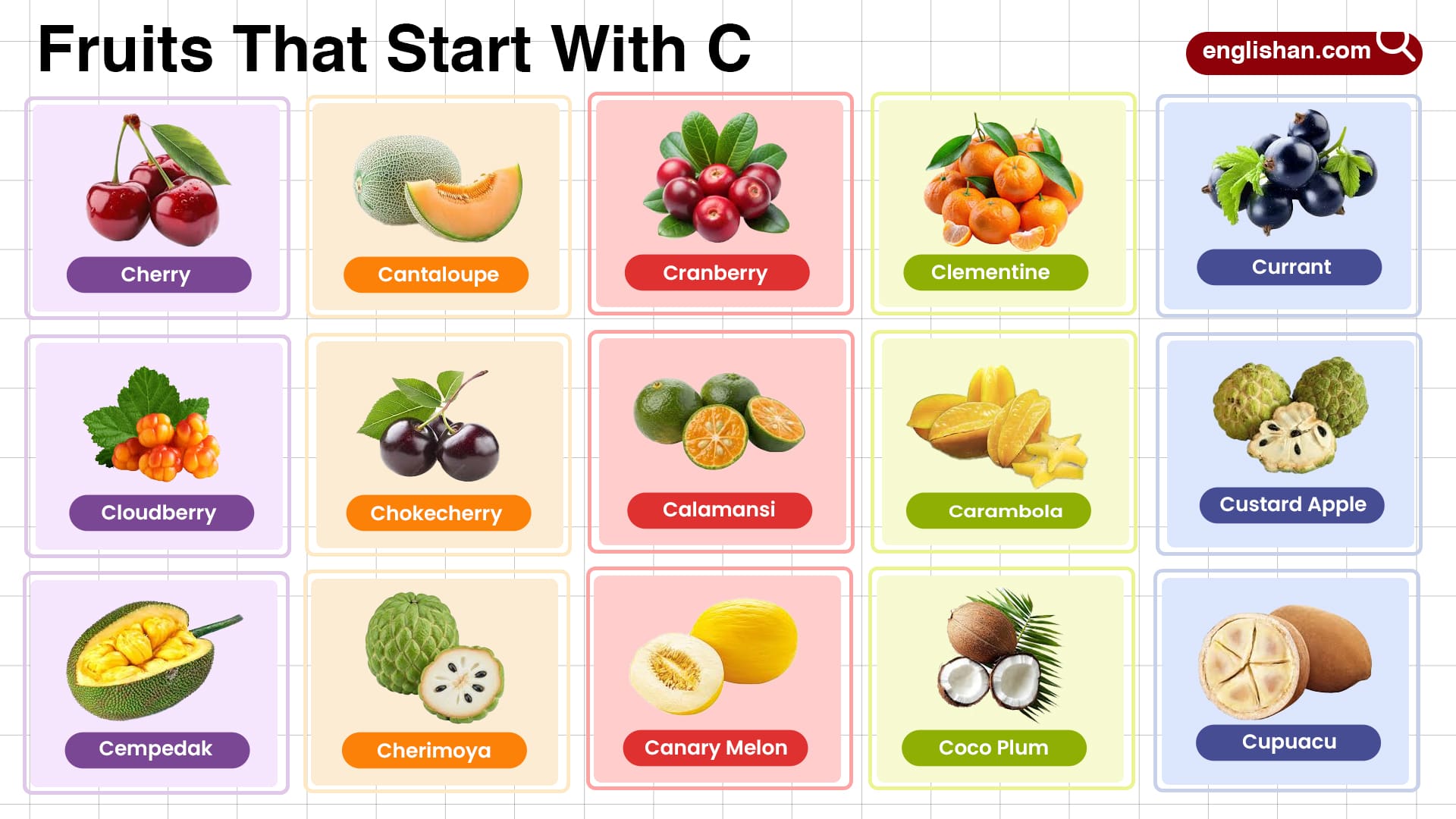
Explore Delicious & Healthy Fruits That Start With C
From the sun-kissed sweetness of a Clementine to the tart burst of a Cranberry, the world of fruits that start with C is incredibly diverse, offering a cornucopia of flavors, textures, and health benefits. These delightful produce items are not just tasty additions to your diet; they are packed with essential vitamins, minerals, and antioxidants that can significantly boost your overall well-being. Whether you're a culinary explorer or simply looking to enhance your daily nutrition, diving into the realm of 'C' fruits promises a delightful and rewarding journey.
In this comprehensive guide, we'll uncover some of the most popular, nutritious, and even exotic fruits that start with C. We'll explore their unique characteristics, highlight their incredible health benefits, and provide practical tips on how to incorporate them into your meals and snacks. Prepare to be inspired to fill your fruit bowl with these vibrant and healthful choices!
A Cornucopia of Citrus and Beyond: Popular "C" Fruits
Let's begin our exploration with some of the most recognized and beloved fruits that start with C, many of which are staples in kitchens worldwide. These fruits are celebrated for their accessibility, versatility, and undeniable health merits.
-
Clementine
A small, seedless, and easy-to-peel member of the mandarin orange family, Clementines are a true winter delight. Known for their sweet, juicy flesh and vibrant aroma, they are an excellent source of Vitamin C, supporting immune health and skin vitality. They make perfect on-the-go snacks and add a refreshing zest to salads.
-
Cherries
Whether sweet or tart, cherries are synonymous with summer and pack a powerful nutritional punch. Rich in antioxidants, particularly anthocyanins, cherries are famed for their anti-inflammatory properties, potentially aiding muscle recovery and reducing the risk of chronic diseases. They're wonderful fresh, in pies, or dried in trail mixes.
-
Cranberries
These small, red berries are perhaps best known for their distinctive tart flavor and their role in urinary tract health. Cranberries contain proanthocyanidins (PACs) that help prevent bacteria from adhering to urinary tract walls. Beyond this, they're a good source of fiber and various vitamins, making them excellent in sauces, juices, or baked goods.
-
Cantaloupe
This fragrant, orange-fleshed melon is a hydrating powerhouse, boasting a high water content. Cantaloupe is an exceptional source of Vitamin A (in the form of beta-carotene) and Vitamin C, contributing to vision health, immune function, and skin radiance. Its sweet, musky flavor makes it a refreshing breakfast item or dessert.
-
Coconut
More than just a tropical icon, the coconut is incredibly versatile, with its water, milk, oil, and flesh all widely used. Coconut water is a natural electrolyte-rich beverage, while the flesh provides healthy fats, fiber, and minerals. It's a staple in many cuisines, offering a unique flavor and texture to both sweet and savory dishes.
-
Carambola (Star Fruit)
Named for its distinctive star shape when sliced, Carambola is a beautiful and mildly sweet-tart fruit. It's rich in Vitamin C and fiber, with a crisp, juicy texture. Star fruit is low in calories and can be enjoyed fresh, added to fruit salads, or used as an elegant garnish. (Note: Individuals with kidney issues should avoid star fruit due to its oxalic acid content.)
Nutritional Powerhouses: Why "C" Fruits Belong in Your Diet
The abundance of fruits that start with C isn't just a linguistic coincidence; it's a testament to the sheer volume of nutritious options available. Many of these fruits are celebrated for specific health benefits that can significantly impact your well-being. When considering how to Boost Your Diet: Essential "C" Fruits and Their Benefits, you'll quickly discover a wealth of advantages.
-
Vitamin C Supremacy: It's no surprise that many fruits that start with C are bursting with Vitamin C. This powerhouse vitamin is crucial for a strong immune system, protecting your body against infections. It's also vital for collagen production, meaning healthier skin, stronger bones, and faster wound healing. Think of the citrus family—Clementines, for instance—as your daily dose of immune-boosting goodness.
-
Antioxidant Richness: Beyond Vitamin C, fruits like cherries and cranberries are loaded with various antioxidants (such as anthocyanins and proanthocyanidins). These compounds combat oxidative stress in the body, which is linked to aging and numerous chronic diseases, including heart disease and certain cancers. Incorporating these fruits can help protect your cells from damage.
-
Fiber for Digestive Health: Almost all fruits, including our 'C' selections like Cantaloupe and Carambola, are excellent sources of dietary fiber. Fiber is essential for a healthy digestive system, preventing constipation, promoting satiety (which can aid weight management), and helping to regulate blood sugar levels.
-
Hydration and Electrolytes: Fruits with high water content, like Cantaloupe and Coconut (especially its water), are fantastic for staying hydrated. Coconut water, in particular, is rich in electrolytes like potassium, making it an excellent natural rehydration drink after exercise or on a hot day.
-
Anti-inflammatory Properties: Cherries have gained significant attention for their potent anti-inflammatory effects. Regular consumption can help reduce muscle soreness, ease symptoms of arthritis, and contribute to overall inflammatory balance in the body, thanks to their unique phytonutrient profile.
By regularly including these nutrient-dense options among your fruit choices, you are actively supporting a wide array of bodily functions and enhancing your preventative health strategy.
Exploring the Exotic: Less Common Fruits That Start With C
While we cherish the popular choices, the world of fruits that start with C extends far beyond the familiar. There's a realm of unique and intriguing varieties waiting to be discovered, each offering its own distinctive charm. For a deeper dive into some truly special produce, explore how we move from Cantaloupe to Coconut: Unique Fruits Beginning With C, and then beyond!
-
Cherimoya (Custard Apple)
Often called "nature's ice cream," the Cherimoya is a truly sublime tropical fruit. With a creamy, custardy texture and a flavor profile reminiscent of pineapple, banana, and strawberry, it's an unforgettable experience. Rich in Vitamin C, fiber, and antioxidants, it's best enjoyed fresh, chilled, and scooped out with a spoon.
-
Chico Sapote (Sapodilla)
Originating from Mexico, Central America, and the Caribbean, the Chico Sapote has a sweet, malty flavor often compared to brown sugar or caramel. Its granular, pear-like texture makes it a unique addition to the fruit family. It's a good source of fiber, Vitamin C, and antioxidants.
-
Cloudberry
Native to arctic and subarctic regions, Cloudberries are rare and highly prized. These amber-colored berries resemble raspberries but have a distinct tart, earthy flavor. They are exceptionally rich in Vitamin C and Omega-3 and Omega-6 fatty acids, making them a superfood in their native lands, often used in jams and desserts.
-
Cupuaçu
An Amazonian fruit related to cacao, Cupuaçu boasts a fragrant pulp with a unique flavor profile described as a mix of chocolate, pineapple, and passion fruit. It's used to make juices, desserts, and even a type of chocolate called cupulate. High in antioxidants and unique phytonutrients, it's gaining recognition as a powerful superfood.
-
Canistel (Eggfruit)
Sometimes referred to as "eggfruit" due to its texture, which resembles a hard-boiled egg yolk, Canistel has a sweet, custardy taste. Its flavor is often likened to sweet potato or pumpkin. Rich in beta-carotene and Vitamin C, it's delicious fresh or incorporated into custards and milkshakes.
Exploring these less common fruits that start with C can expand your palate and introduce you to new nutritional benefits, adding an adventurous twist to your healthy eating habits.
Practical Tips for Enjoying and Incorporating "C" Fruits
Now that we've delved into the delicious world of fruits that start with C, let's explore practical ways to bring them into your everyday diet. Making these healthful choices a regular part of your routine is easier than you think!
-
Choosing Ripe Fruits
Clementines: Look for firm, bright orange skin that feels heavy for its size. Avoid soft spots or mold.
Cherries: Choose plump, firm cherries with bright, consistent color and intact stems.
Cantaloupe: Select a melon that feels heavy, has a slight give at the blossom end, and emits a sweet, musky aroma.
Cherimoya: A ripe cherimoya should yield slightly to gentle pressure, similar to an avocado, and have a fragrant smell. -
Creative Culinary Uses
- Smoothies: Blend cranberries, cantaloupe, or coconut water into your morning smoothie for a nutrient boost.
- Salads: Add segments of clementines or halved cherries to green salads for a burst of flavor and color. Carambola slices make a beautiful garnish.
- Desserts: Incorporate cherries into crumbles, pies, or chocolate recipes. Coconut flakes can top almost any sweet treat.
- Savory Dishes: Cranberry sauce is a classic accompaniment to poultry. Coconut milk is essential in many curries and stews, lending creaminess and depth.
- Snacks: Simply enjoy any of these fruits fresh as a healthy and satisfying snack.
-
Storage Tips
Most fruits that start with C, once ripe, can be stored in the refrigerator to extend their freshness. Cherries and cranberries will last longer refrigerated, while cantaloupe should be stored at room temperature until ripe, then refrigerated after cutting. Coconuts can be stored at room temperature for several weeks.
-
Seasonal Awareness
While many fruits are available year-round, enjoying them in season often guarantees the best flavor and nutritional value. Cherries are typically a summer fruit, while clementines shine in the winter months. Cranberries are synonymous with autumn harvests.
Conclusion
The journey through fruits that start with C reveals a world brimming with flavor, versatility, and unparalleled health benefits. From the familiar comfort of a juicy Cantaloupe to the exotic allure of a Cherimoya, these fruits offer endless possibilities for enhancing your diet. Rich in Vitamin C, fiber, and potent antioxidants, they play a crucial role in boosting immunity, supporting digestion, and protecting overall cellular health.
Embracing these delicious options, whether in your daily smoothie, a vibrant salad, or simply as a refreshing snack, is a simple yet effective way to nourish your body and delight your palate. So, next time you're at the market, don't hesitate to fill your basket with these wonderful 'C' fruits and embark on your own delicious and healthy exploration!
